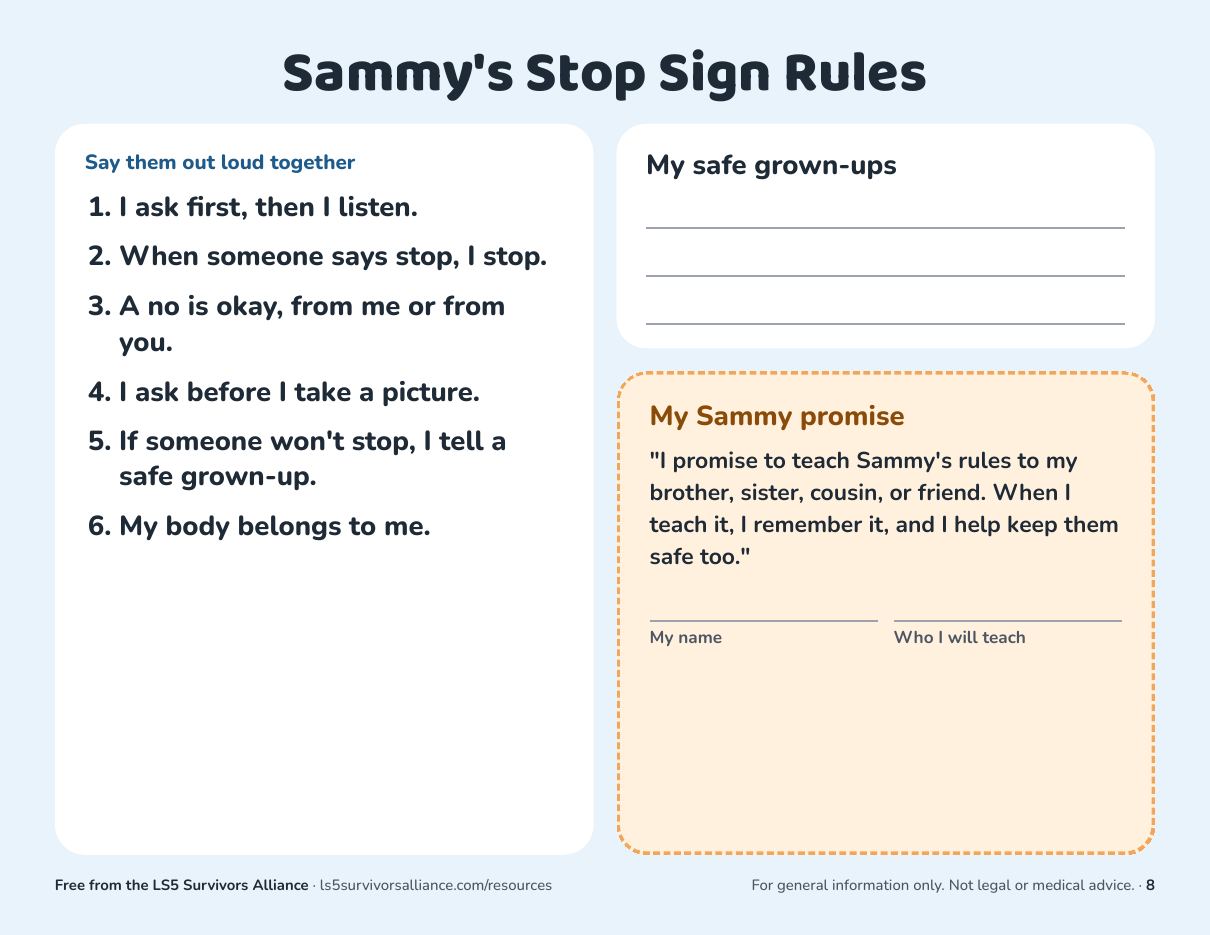
 Sammy's
Watch together
Sammy's Stop Sign Song · 2:13. Watch it together, then practice: hold up your hand and say, “Stop, I don't like that.”
Say this tonight
- If you say stop, I will stop. If a friend says stop, you stop too.
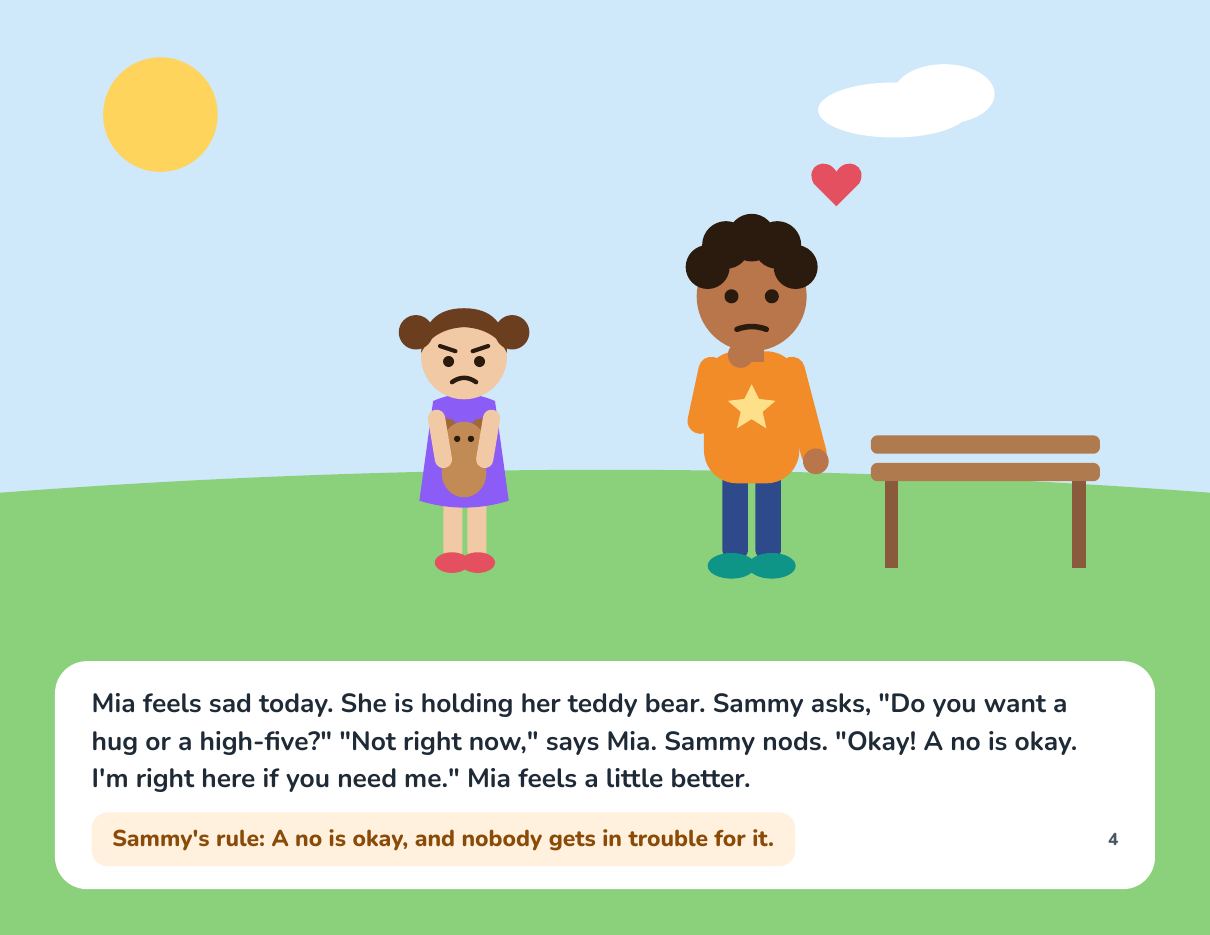
- You can always say no thanks to a hug, even with family.
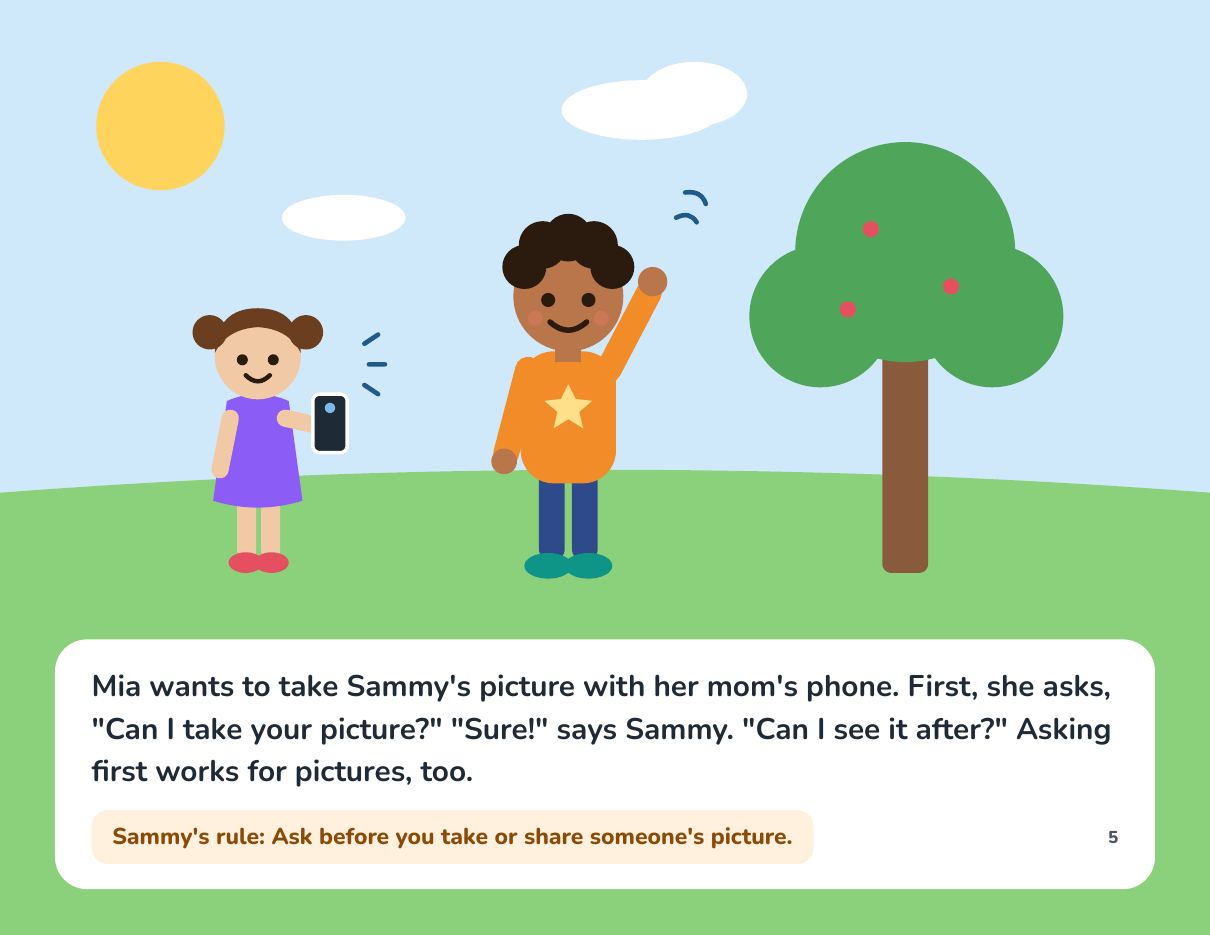
- Always ask before you take or share a picture of someone.
Show it at home
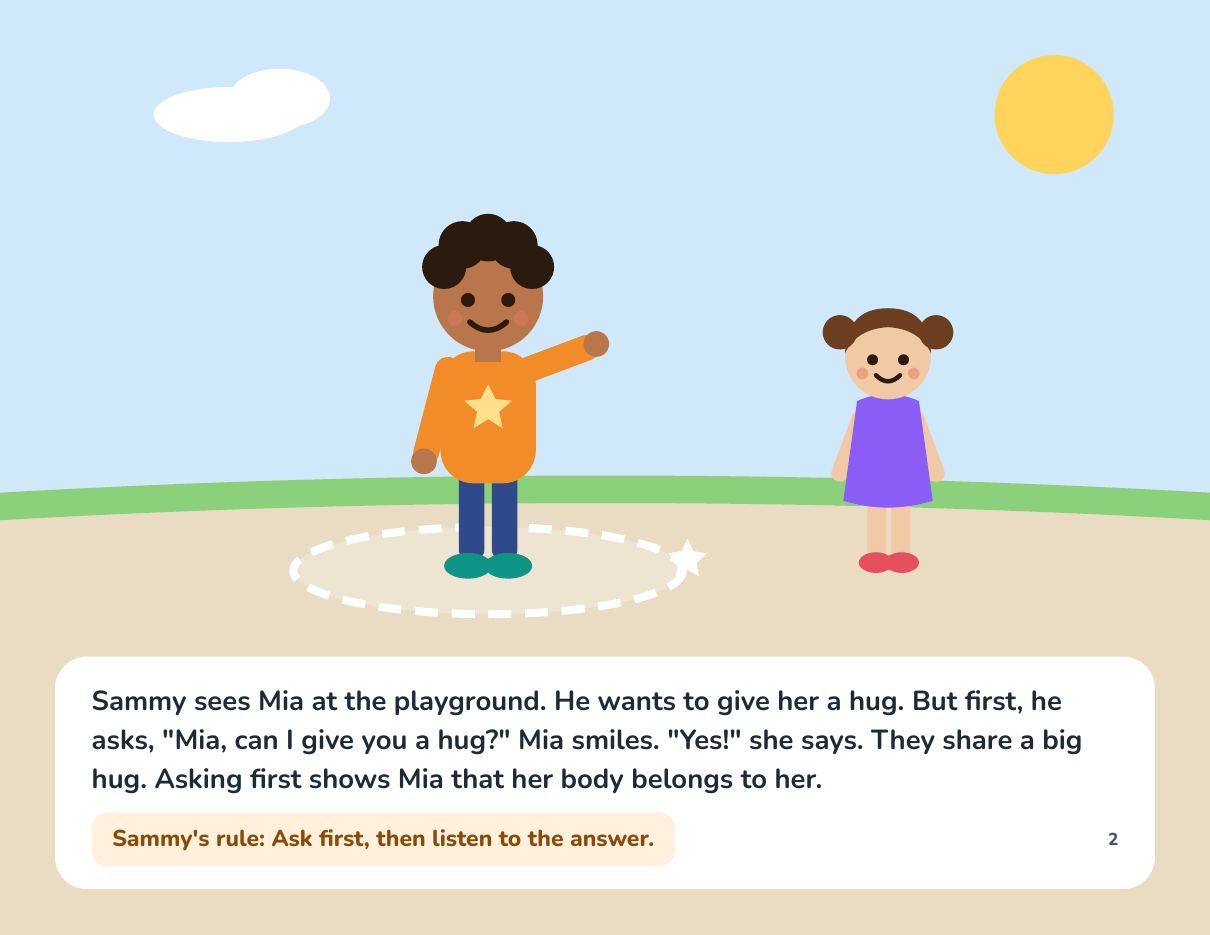
- Ask first. “Can I have a hug?”
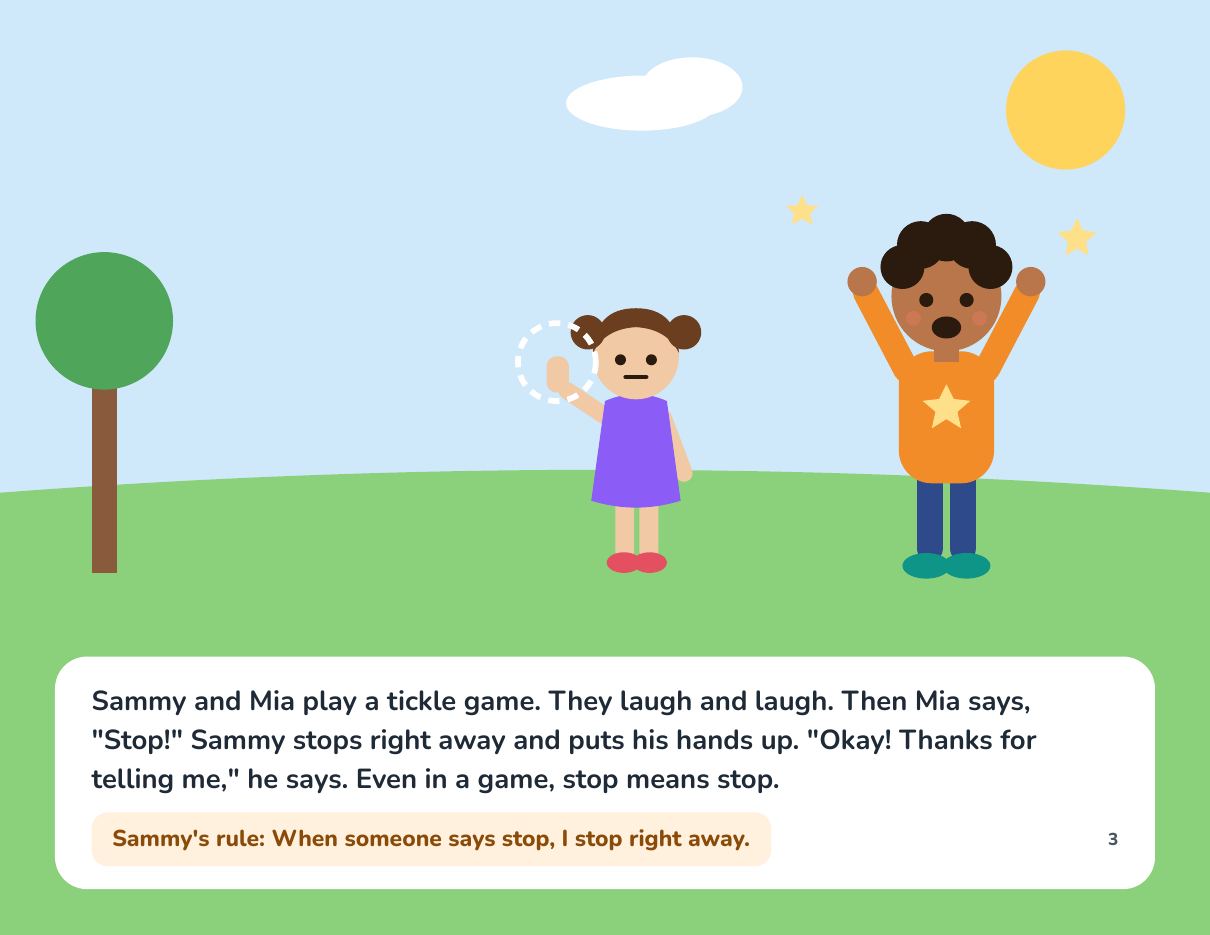
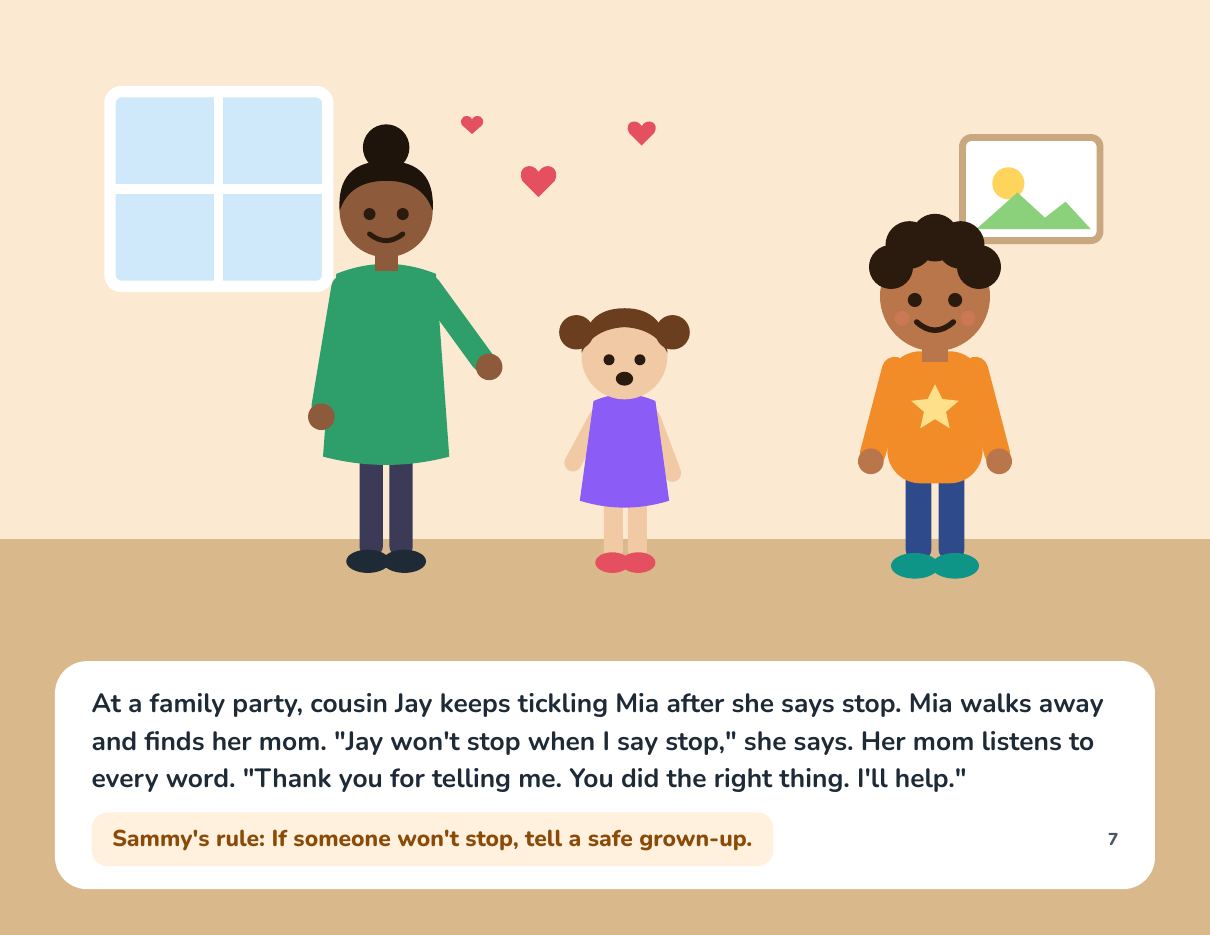
- Stop means stop. Stop tickling or wrestling the second your child says stop.
- No forced kisses. Never make your child hug or kiss a relative. A wave is fine.
- Ask about pictures. Ask your child before you take or post pictures of them.
Read the book together
Sammy and the Stop Sign. Swipe to turn the page.
Want to know more?
Tap any question to open it.
What to say at each age
- Ages 3 to 5: “If you say stop, I will stop. If a friend says stop, you stop too.”
- Ages 6 to 9: “You can always say no thanks to a hug, even with family. You will not be in trouble.”
- Ages 10 to 12: “Ask before you take or share a picture of someone. And nobody should ask you for pictures.”
Why consent keeps kids safe
Kids who know their no matters are more likely to speak up when something feels wrong. And when every safe adult respects a child's no, the one adult who doesn't stands out.
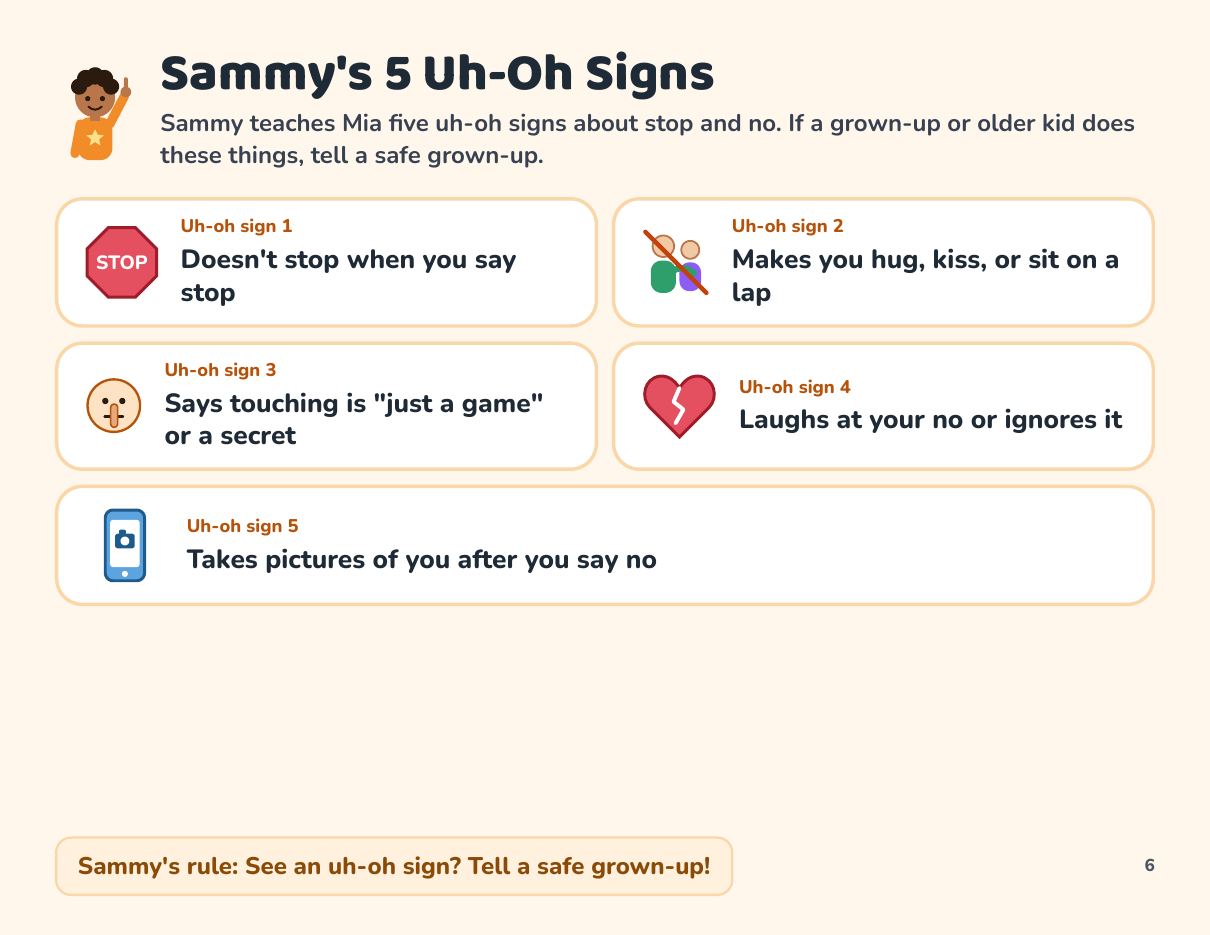
Warning signs in an adult or older kid
- Laughs at or ignores your child's no
- Keeps tickling or wrestling after your child says stop
- Pushes for hugs, kisses, or lap sitting
- Takes or asks for pictures after your child says no
- Calls touching “just a game” or “our secret”
A safe adult stops the first time a child says stop.
Family quiz: true or false?
- It's okay to keep tickling after someone says stop. False.
- You should ask before you hug a friend. True.
- You have to kiss a relative if they ask. False.
- You can say “No thanks” to a hug and give a high-five instead. True.
- If someone won't stop, keep it a secret. False.
How do I explain consent to a young child?
Keep it simple: my body belongs to me, and your body belongs to you. We ask before we touch, and we listen to the answer.
What age should I start?
Around age 3, start with “stop means stop.” From 6 to 9, add asking first. From 10 to 12, add that consent counts online too.
Should I make my child hug relatives?
No. Offer a high-five or a wave instead. It teaches your child that their no matters.
More guides
Updated October 2026. Sources: Darkness to Light, The Center for Child Protection.